Can Roofing Underlayment Keep Your Home Dry if Shingles Leak?
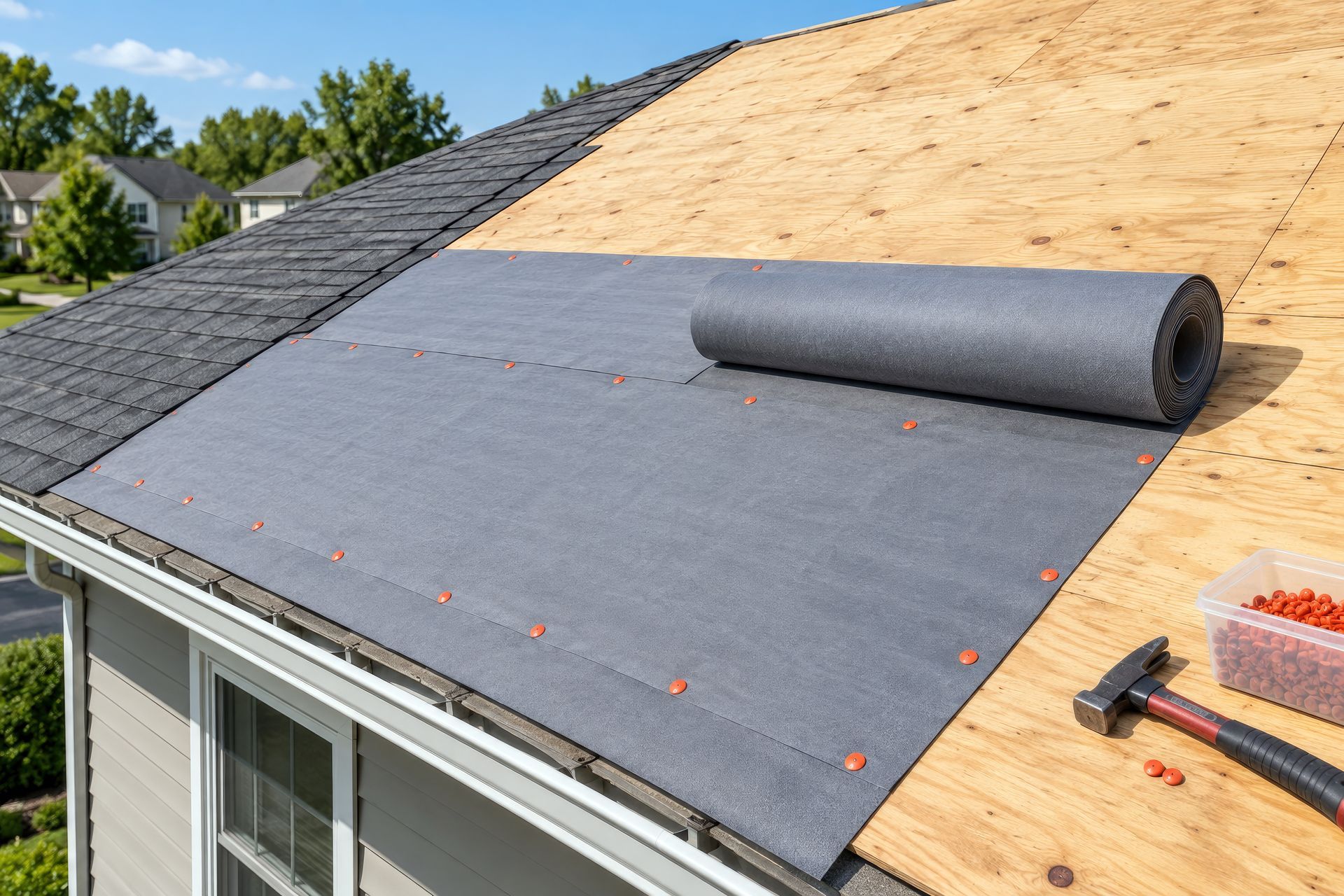
The underlayment beneath your home’s shingles provides an additional barrier to help keep water from reaching the roof decking and interior of your home. If shingles are damaged or missing, it may temporarily keep water out, but it isn't intended to remain exposed to the elements.
What Is Roofing Underlayment?
Roofing underlayment is a sheet of synthetic material or asphalt-saturated felt installed between the roof decking and the shingles or other roofing material.
If water manages to penetrate beneath shingles, particularly around roof valleys, flashing and other transitions, underlayment provides another layer of protection between that moisture and the decking.
Synthetic underlayment is commonly used in modern roofing systems and generally performs well in wet climates like the Puget Sound region.
How Can Water Get Beneath Shingles?
Shingles are designed to shed water, but missing, cracked, lifted or damaged shingles can expose deeper layers of the roofing system to moisture.
Water can also get beneath shingles through damaged, deteriorated or improperly installed flashing around chimneys, vents, valleys and other roof transitions.
When water gets through the outer roofing material, the underlayment may prevent it from immediately reaching the decking. However, that does not mean the underlying problem can safely be ignored.
Underlayment Can Fail Too
Underlayment is not indestructible. Damage during installation or afterward can compromise its ability to act as a moisture barrier.
- Problems can occur when seams are improperly installed or inadequately sealed
- Fastener holes, tears, punctures and improperly sealed roof penetrations can create pathways for water
- Installation errors can leave gaps or improperly protected areas where moisture can get through
If water is repeatedly getting beneath damaged shingles, the underlayment may eventually be exposed to more moisture than it was designed to handle.
Can Water Reach Underlayment if the Shingles Aren’t Damaged?
Yes. Shingles can still be in good condition even when small amounts of moisture occasionally reach the underlayment. This can happen due to:
- Wind-driven rain being pushed beneath overlapping roofing materials
- Water backing up beneath roofing materials when normal drainage is disrupted
- Water entering through deteriorated sealants or exposed fasteners even when the shingles themselves remain intact
How Can You Tell if Water Is Getting Beneath Your Shingles?
If the underlayment is doing its job, there may be no visible signs inside your home that water has made it past the shingles. However, some exterior problems can indicate that water has a potential path into the roofing system, including:
- Missing, cracked or lifted shingles
- Damaged or loose flashing
- Exposed fasteners or other openings
- Damage around vents, chimneys or other roof penetrations
Once moisture gets through the underlayment and reaches the decking, signs may become more apparent. Damp or stained roof decking may be visible from the attic, while more extensive intrusion can eventually cause ceiling stains or dripping water inside the home.
Missing shingles or obvious roof damage may sometimes be visible from the ground, but many problems are difficult or impossible for a homeowner to spot on their own. Subtle shingle, flashing and roof penetration damage is one reason periodic roof inspections are a good idea for Seattle homeowners.
Protect Your Seattle Roof With Our Roofing Team
Chet's Roofing & Construction provides professional roofing services for homeowners in the Seattle area. Whether you need a roof inspection, roof repair or roof replacement, our team can evaluate your roofing system and help determine the appropriate next step.
Contact our roofers today at (877) 611-1514 to schedule a professional inspection and keep your home protected from Seattle's wet weather.