What Granules in Your Gutters May Mean for Your Seattle Roof
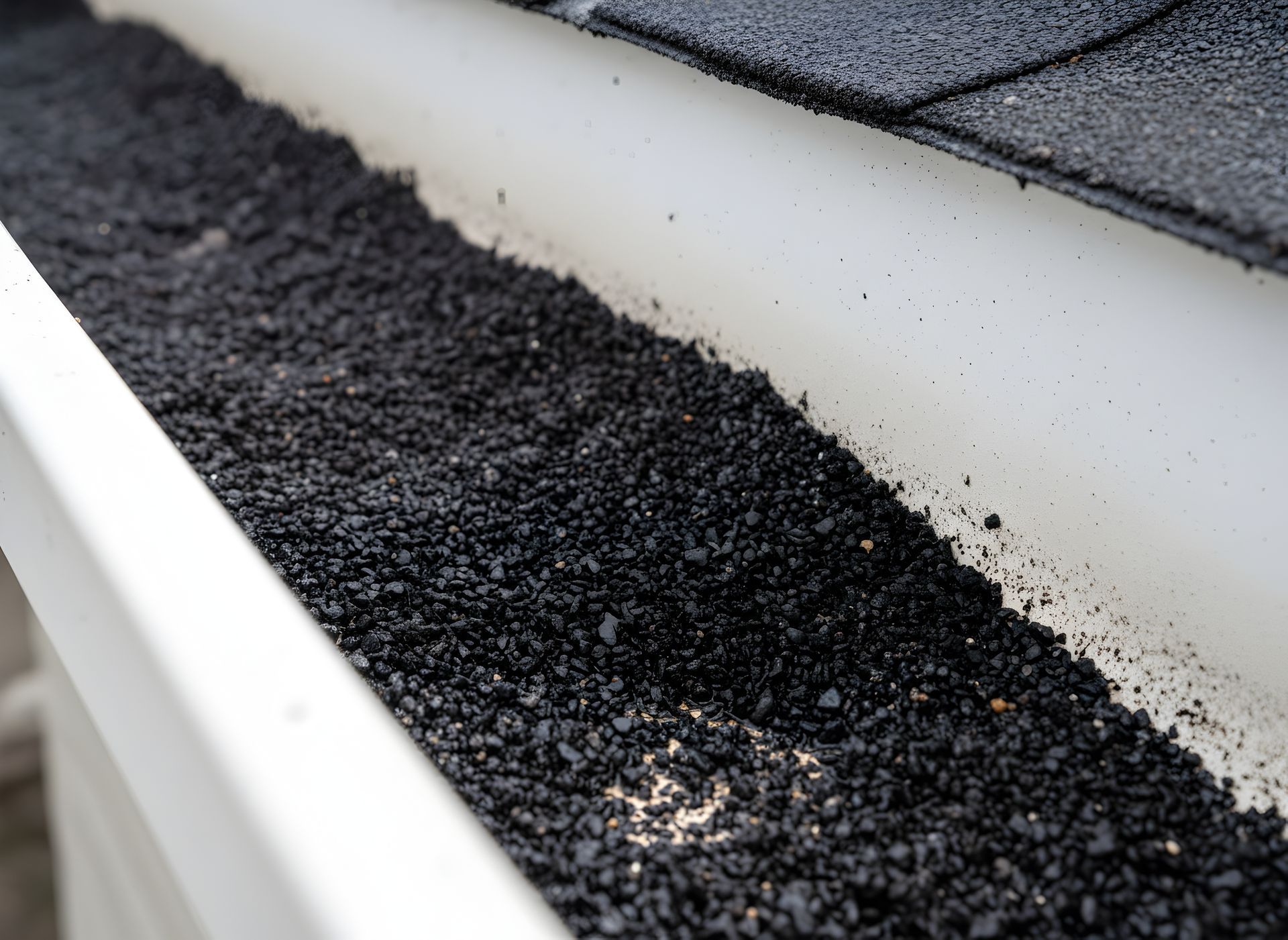
Many Seattle homeowners eventually notice small, sand-like particles collecting in their gutters or near downspouts. At first glance, these granules may not seem like a major concern, but they can sometimes indicate that an asphalt shingle roof is beginning to wear down.
While some granule loss is normal, excessive buildup in gutters may point to aging shingles, moisture-related wear or larger roofing problems that should not be ignored.
What Are Roof Granules?
The granule layer serves several important purposes, including:
- Protecting asphalt from UV rays
- Helping shingles resist weathering
- Improving fire resistance
- Reducing surface deterioration
- Giving shingles their color and textured appearance
- Extending overall roof lifespan
Over time, shingles naturally lose some granules as they age and experience repeated exposure to rain, temperature changes, debris and moisture.
Where Homeowners Usually Notice Granules
Most homeowners first notice granule loss while cleaning gutters or observing runoff areas near downspouts. The granules often resemble coarse black or gray sand and may collect in:
- Gutters
- Downspout exits
- Splash blocks
- Driveways near drainage areas
- Patio surfaces below gutters
Granules may also become more noticeable after heavy rainstorms or during seasonal gutter cleanings.
In some cases, homeowners only discover the issue after noticing roof discoloration, uneven shingle appearance or bare-looking areas on the roof surface itself.
Normal Granule Loss vs. Warning Signs
Not all granule loss indicates a roofing problem. In fact, some granule shedding is expected throughout the lifespan of an asphalt shingle roof.
For example, newer roofs often lose a small amount of excess granules shortly after installation. These loose granules are typically leftover from the manufacturing process and usually do not indicate damage.
Minor granule loss over time is also normal as shingles age naturally. However, excessive or uneven granule loss may signal that the roof is beginning to deteriorate.
Potential warning signs include:
- Large amounts of granules collecting repeatedly
- Bald or shiny spots on shingles
- Uneven roof coloring
- Exposed black asphalt areas
- Cracking or curling shingles
- Soft or deteriorating roof sections
- Frequent gutter granule buildup after storms
Why Pacific Northwest Rain Accelerates Roof Wear
Seattle’s climate creates unique roofing challenges that can accelerate shingle wear over time. Constant moisture exposure, heavy rainfall, damp debris accumulation and long wet seasons place ongoing stress on roofing materials.
Unlike hotter climates, where UV exposure is the primary concern, Pacific Northwest roofs often face:
- Persistent moisture
- Moss and algae growth
- Standing water risks
- Wet debris buildup
- Freeze-thaw cycles during colder months
- Increased drainage system demand
Rainwater continuously flowing over shingles can gradually loosen protective granules as the roof ages. In areas where drainage is poor or gutters become clogged, moisture may remain trapped on roofing surfaces for extended periods, accelerating granule deterioration.
Moss growth can make the problem worse. Moss retains moisture against shingles, which may contribute to premature wear and granule loss. Over time, this can weaken the roof’s protective surface and expose underlying materials to further damage.
Risks of Bald Spots and Exposed Asphalt
Granules play an important role in protecting asphalt shingles from environmental damage. When shingles begin losing large amounts of granules, the underlying asphalt layer becomes increasingly exposed.
This exposure can create several problems, including:
- Faster aging of shingles
- Increased moisture penetration
- Reduced UV protection
- Greater vulnerability to cracking
- Higher risk of leaks
- Reduced overall roof lifespan
Bald spots are especially concerning because they indicate the protective surface of the shingle is wearing away. Once asphalt becomes exposed, the shingle can deteriorate much faster under ongoing weather exposure.
When Granule Loss May Justify Roof Replacement
While some roofs can continue functioning with moderate granule loss, extensive shedding may indicate that the roofing system is nearing the end of its usable lifespan.
An aging roof with widespread granule deterioration often becomes less effective at protecting the home from Seattle’s frequent rain and moisture exposure. A professional roofing inspection can help determine whether granule loss is a localized problem that can be repaired or whether a full roof replacement is the safer option.
Protect Your Seattle Roof with Routine Inspections
Regular roof inspections and gutter maintenance play a major role in identifying roofing problems before they become severe. Cleaning gutters regularly can also help homeowners monitor for excessive granule buildup while also preventing drainage problems that can worsen roof deterioration.
Seattle homeowners should also watch for:
- Moss accumulation
- Water pooling
- Loose shingles
- Roof staining
- Overflowing gutters
- Interior water stains
Schedule a Roof Inspection for Your Seattle Home
Whether your roof is experiencing normal aging or more significant granule loss, Chet’s Roofing & Construction can evaluate the condition of your roofing system and recommend practical next steps to help protect your home from Puget Sound weather conditions.
Contact us at (877) 611-1514 to schedule an inspection.