
Why Chimney Cricket and Backwater Leaks Get Missed on Seattle Roofs
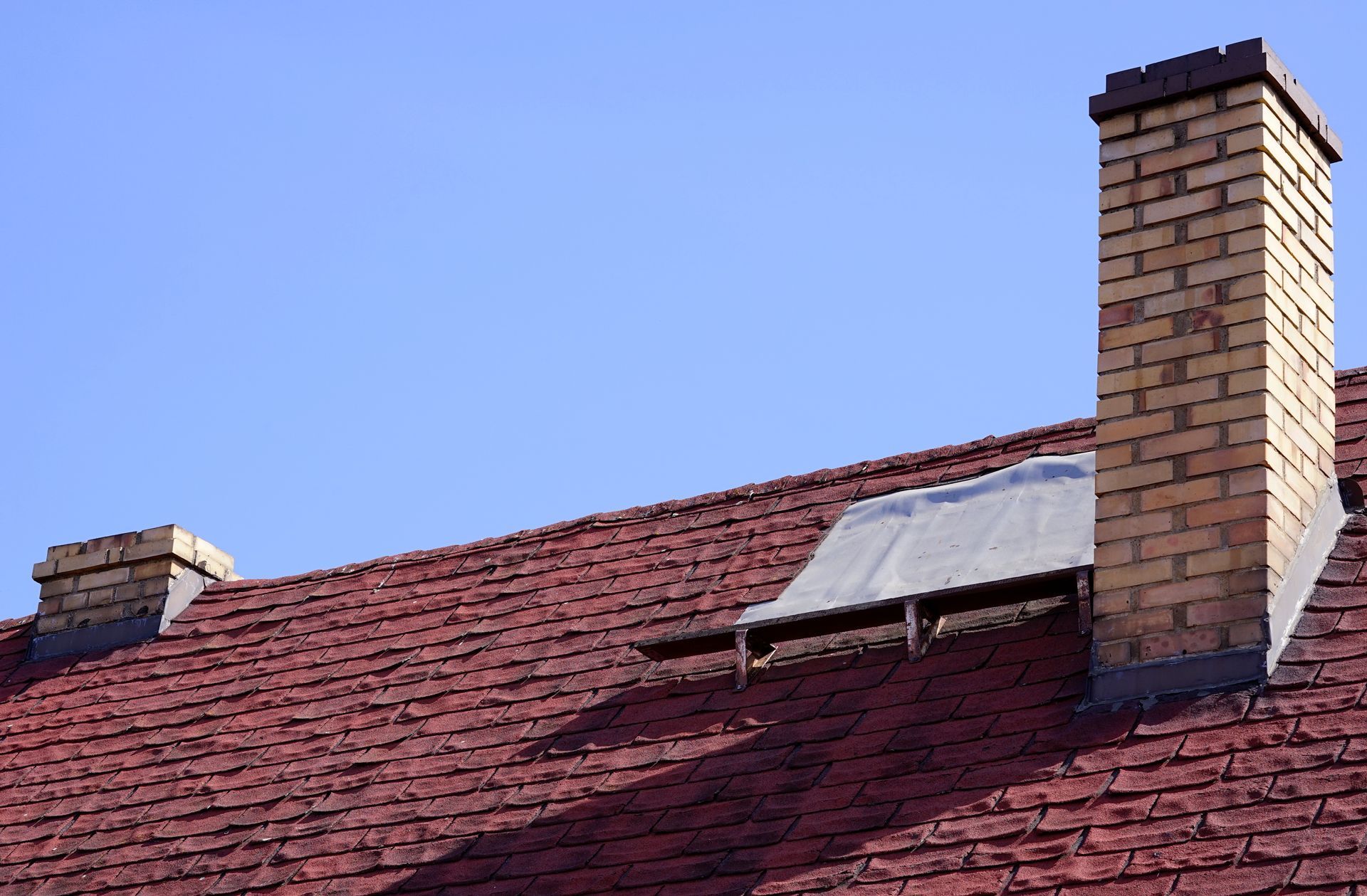
Chimney leaks are one of the most frustrating roof issues in Seattle homes. They rarely announce themselves with dramatic shingle loss or obvious exterior damage. Instead, they show up as interior staining, damp drywall or slow, recurring leaks that seem to resist simple fixes.
In many cases, the root cause is not the chimney itself, but a missing or poorly executed chimney cricket, also called a chimney saddle. This small but critical flashing detail is often overlooked or improperly installed despite playing a major role in preventing backwater leaks on Seattle roofs.
Why Chimneys Are Natural Water Traps
A chimney interrupts the smooth flow of water down a roof. When a chimney sits on the downslope side of the roof, water naturally converges behind it as it travels downward. In Seattle’s climate, this convergence is compounded by:
- Frequent rain events rather than short storms
- Slow roof dry-out due to cloud cover
- Organic debris like needles and leaves that collect upslope
Over time, water and debris accumulate behind the chimney, creating what roofers refer to as a backwater condition. Instead of shedding water efficiently, the roof allows it to linger in one of its most vulnerable areas.
What a Chimney Cricket Actually Does
A chimney cricket is a raised, peaked structure installed on the upslope side of a chimney. Its purpose is simple but essential: it splits water and debris, directing runoff around the chimney instead of allowing it to pool behind it.
Without a cricket, water presses directly against flashing seams and masonry. With a properly designed cricket, runoff is diverted to both sides of the chimney, reducing pressure and preventing debris buildup.
On wider chimneys, like those common in older Seattle homes, a cricket is not optional. It is a necessary component for long-term leak prevention.
Why Seattle Roofs Are Especially Vulnerable
Seattle roofs experience long periods of steady moisture rather than intense, fast-moving rain. This exposes weaknesses that might not matter in drier or more seasonal climates. Backwater conditions behind chimneys are especially problematic here because:
- Water has more time to work into seams
- Debris stays wet and compacted longer
- Flashing materials experience regular exposure to moisture
Even well-installed shingles cannot compensate for flawed flashing design in these conditions.
The Role of Proper Flashing at Chimneys
A chimney cricket alone is not enough. It must work in conjunction with correctly installed step flashing, counter flashing and base flashing. Here is how the system is meant to work:
- Step flashing is woven into each course of shingles along the chimney sides, directing water downward
- Counter flashing is embedded into the chimney masonry or siding, covering the top edge of step flashing
- Base flashing manages water at the front of the chimney
- The cricket diverts water before it ever reaches these seams
When any of these components are missing, undersized or improperly integrated, water finds a path in.
Common Failure Points Roofers See
During inspections, roofers often find chimney leaks caused by craftsmanship issues rather than material failure. Common problems include:
- Chimneys without crickets despite sufficient width
- Crickets that are too flat to divert water effectively
- Step flashing nailed through exposed surfaces
- Counter flashing surface-mounted instead of properly embedded
- Sealant used as a substitute for proper metal detailing
These shortcuts may hold temporarily, but they rarely survive multiple Seattle winters.
Why Sealant Is Not a Long-Term Solution
One of the biggest red flags around chimneys is heavy reliance on caulk or roofing cement. Sealants degrade faster than metal flashing and cannot accommodate constant movement between the roof and chimney.
When sealant fails, water intrusion resumes, often worse than before. A properly detailed chimney relies on mechanical water shedding, not surface-applied patches.
Why Chimney Leaks Are Often Misdiagnosed
Chimney leaks are frequently mistaken for general roof leaks or masonry problems. Repairs may focus on shingles or chimney caps without addressing the real issue behind the chimney.
This is why leaks return after “repairs” that never addressed the missing or poorly installed cricket. Until runoff is redirected properly, water will continue to exploit the same weak point.
Craftsmanship Matters More Than Materials
Most chimney leak problems are not caused by bad shingles or low-quality flashing metal. They are caused by missing details or improper sequencing during installation. A well-built cricket and flashing system requires:
- Correct sizing and slope
- Integration with underlayment and shingles
- Proper metal bends and overlaps
- Attention to how water actually moves on the roof
This level of detail is what separates temporary fixes from long-term solutions.
Schedule a Chimney Flashing Inspection With Our Roofers in Seattle
Chet’s Roofing & Construction provides detailed roof and chimney flashing inspections focused on water flow and long-term performance. Call us at (877) 611-1514 to schedule an inspection from our detail-oriented experts.