Why It’s Important to Identify Deck Rot, Lifted Boards and Fastener Corrosion Before Spring
In the Seattle area, decks spend much of the year exposed to steady rain, high humidity and limited opportunities to fully dry out. While winter weather may not always bring heavy snow, the constant moisture and cool temperatures create conditions where small issues can quietly develop below the surface.
Many deck problems are first noticed in spring, not because they suddenly appeared, but because people start using their decks again.
Winter moisture often accelerates early wear at fasteners, board ends and connection points. Spotting and addressing those signs early can help homeowners avoid more extensive repairs later in the year.
Why Winter Moisture Affects Decks in Seattle
Seattle’s climate creates a unique challenge for exterior structures. Decks are frequently wet for long periods, especially in shaded areas or where drainage is limited. Without consistent drying cycles, moisture lingers around fasteners, between boards and at ledger connections.
Over time, this environment can contribute to:
- Localized wood rot around fasteners
- Boards that begin to lift or cup as moisture levels fluctuate
- Corrosion on nails, screws and connectors
These changes happen gradually. They are often subtle and easy to miss during winter months when decks are used less frequently.
Spot Rot Often Starts at Fastener Penetrations
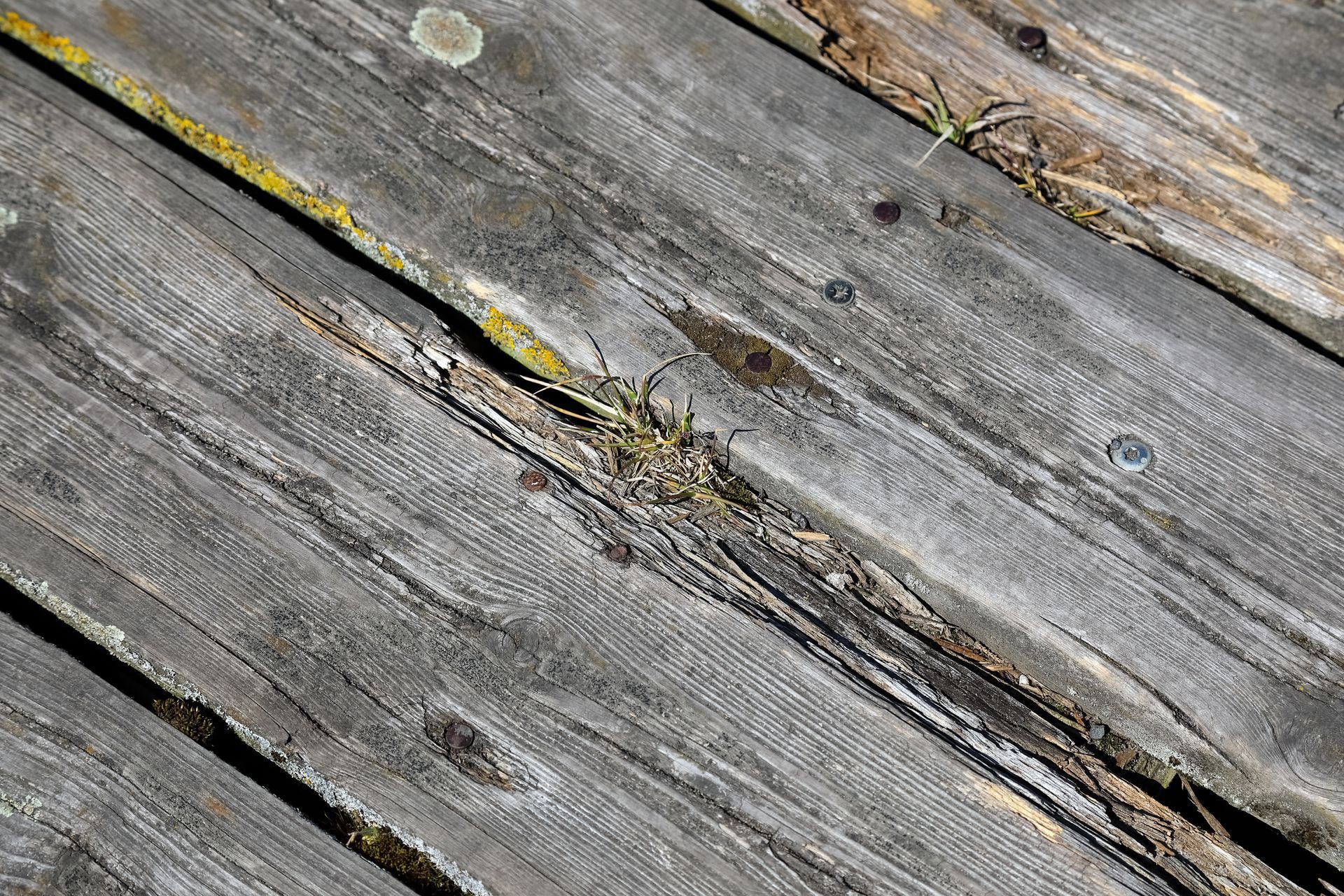
Spot rot does not usually appear as widespread decay early on. It often begins in small areas where moisture is trapped, especially around fasteners and where boards meet framing members.
Fastener penetrations allow moisture to move into the wood. In winter, when drying is limited, that moisture stays in place longer. Over time, the surrounding wood fibers can soften, even if the rest of the board appears intact. Early signs of spot rot include:
- Darkened wood around screw or nail heads
- Slight softness when pressed with a screwdriver
- Wood fibers that feel spongy rather than firm
Catching spot rot early allows for targeted repairs rather than full board replacement.
Lifted or Shifting Boards After Winter
Temperature changes and prolonged moisture exposure can cause decking boards to move. Wood expands when wet and contracts as it dries. In Seattle’s climate, those cycles can be uneven, especially in winter. Lifted boards are often the result of:
- Fasteners loosening due to wood movement
- Swelling and shrinking around screw shafts
- Minor warping from repeated moisture exposure
Boards that sit slightly higher than their neighbors or feel uneven underfoot are not necessarily dangerous, but they are indicators that the deck is responding to winter conditions. Addressing these issues early can prevent further movement or wear.
Fastener Corrosion Is Easy to Overlook
Metal corrosion is one of the most common winter-related deck issues in the Pacific Northwest. Moisture combined with treated lumber can accelerate corrosion on fasteners that are not properly rated for exterior use. Early signs of corrosion include:
- Rust staining around fastener heads
- Discoloration on metal connectors
- Fasteners that appear swollen or flaky
Corroded fasteners can lose holding strength over time. Identifying corrosion early allows for replacement before it affects surrounding wood or structural connections.
Why Issues Are Often Discovered in Spring
Many homeowners first notice deck problems in spring simply because that is when decks are used again. Furniture comes back out, foot traffic increases and small changes become more noticeable.
What feels like a sudden problem is often the result of months of winter exposure. That is why late winter or early spring inspections are useful. They help identify issues while they are still manageable.
A Simple Visual Inspection Checklist
A simple visual check can reveal early indicators of damage. In some cases, prompt, targeted repairs can prevent you from needing to invest in premature partial or full deck replacement. Look for:
- Soft or darkened areas near fasteners
- Boards that feel uneven, lifted or loose
- Rust staining or visible corrosion on metal components
- Movement when walking across certain sections
- Gaps that appear larger than they did previously
Preventive Maintenance Reduces Spring Repair Scope
Replacing a few fasteners, securing lifted boards or treating localized rot can extend the life of the deck without requiring extensive reconstruction.
Preventive maintenance also allows deck repairs to be scheduled thoughtfully rather than reactively. That can reduce costs, minimize disruption and preserve the overall condition of your home’s deck.
Our Deck Construction Professionals Can Perform a Detailed Inspection and Targeted Repairs
Chet’s Roofing & Construction provides practical evaluations and maintenance guidance for decks affected by winter moisture. Contact us at (877) 611-1514 to schedule an inspection and address early signs of wear before spring use begins.